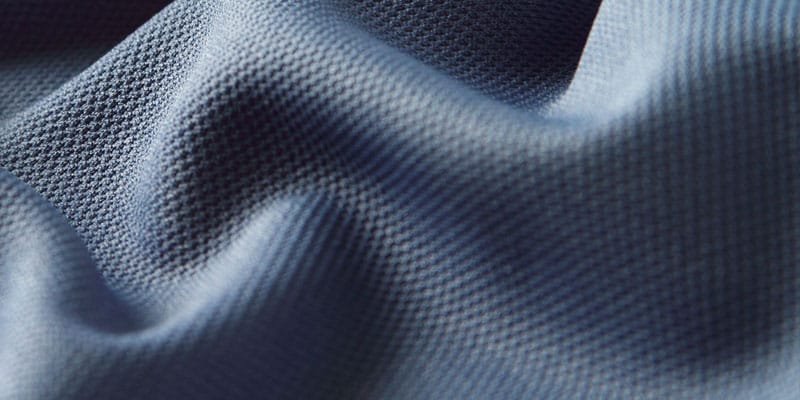
A compression fabric has to apply a defined, consistent pressure and hold it wash after wash. This page gathers the high-elastane knit structures that cover the compression, support and shaping range.
Polyester Stretch Interlock with Elastane
Weight window160–360 g/m²
CertificatesOEKO-TEX® · ISO
IncotermsEXW · FOB · DAP
Elastane carries compression: pressure is set by elastane share, weight and pattern tension. What matters is not day one but wash one hundred — repeated stretch and heat fatigue the elastane and pressure drops. High-recovery stretch interlock is the structure most resistant to that fatigue.
Shapewear needs shaping: ponte double-knit gives a built-up, opaque, shape-holding panel, while high-elastane interlock provides the wrapping pressure. Most products use both. Fersan knits, dyes and heat-sets these structures under one roof; each card carries the rationale, catalogue weight and a technical data sheet. Note: these structures are for sport/support compression — medical (mmHg-class) compression requires separate testing and certification.
Recommended fabrics
01
Polyester Stretch Interlock with Elastane
Stretch interlock + elastane
180–300 g/m²
In this application
The backbone of compression tops and sports bras: four-way stretch plus high recovery, holding pressure through repeated washing.
Composition
Polyester base + elastane; typically 5–12% (from comfort to high recovery). Higher levels belong to warp-knit power nets, not interlock.
Weight windows come from catalogue data; final specs are confirmed on a sample.
Engineering window
Weight window
160–360 g/m² (4.7–10.6 oz/yd²)
Compression / pressure
Pressure is set by elastane share, weight and pattern tension; the target level is confirmed on a sample (medical compression needs separate certification)
Recovery durability
Elastane fatigue lowers pressure; high-recovery interlock holds shape through repeated washing — see the abrasion/pilling guide
Moisture management
Fast-drying polyester on the skin-contact face plus an optional wicking finish
The link pre-fills the quote form with the fabrics on this page.
Frequently asked questions
Are these fabrics medical compression?
No. Sport/support compression differs from medical (mmHg-class) compression, which requires separate testing and certification. The structures here are for sport and shaping compression; a specific pressure target is confirmed on a sample.
Which structure suits shapewear?
Shaping is a matter of structure and weight: ponte double-knit gives a built-up, opaque, shape-holding panel, while high-elastane interlock provides wrapping pressure. The two are usually combined in one product.
Why does compression loosen over time?
Elastane carries the pressure; repeated stretch, heat and washing fatigue it. High-recovery interlock and correct care (low heat, avoiding chlorine and softeners) hold the shape for longer.
Alongside strictly necessary cookies, we use functional and analytics cookies only with your consent. You can choose your preferences and change them any time. Cookie Policy
Cookie preferences
Manage each category separately. Strictly necessary cookies are required for the site to work and cannot be turned off.
NecessaryAlways on
Required for the site’s core functions, security and remembering your cookie preference — including form security (hCaptcha). No consent required.
Functional
Displays embedded content such as Google Maps. When off, the map does not load until you click “Show map”.
Analytics
Helps us improve the site by measuring visit statistics. Currently inactive; when enabled it runs only with your consent.