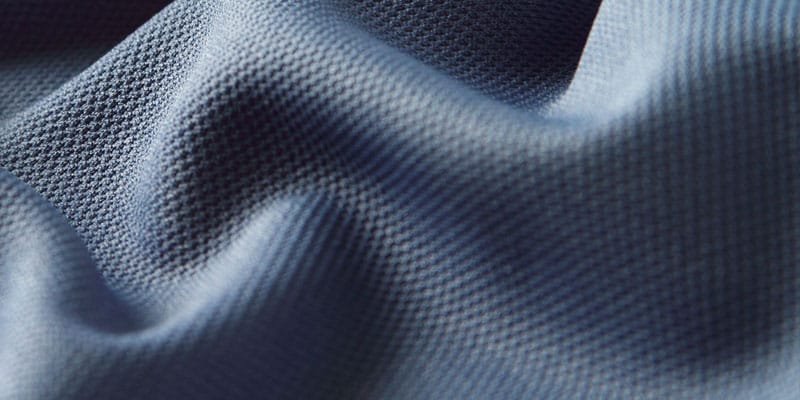
A good legging bends, squats and springs back — without going sheer under light. This page gathers the stretch knit structures that cover the yoga, running-tight and athleisure range.
Polyester Stretch Interlock with Elastane
Weight window130–360 g/m²
CertificatesOEKO-TEX® · ISO
IncotermsEXW · FOB · DAP
A legging has to follow movement without restricting it, then return to shape. Elastane share and knit structure set both: stretch interlock moves in four directions with high recovery, while two-way elastane knits follow the body with less spring-back.
Squat-proof opacity is a matter of weight and tight construction: under stretch the loops open, and a thin, loose structure goes sheer. Fersan builds the chain under one roof — from its own filament to knitting, dyeing and heat-setting; each card carries the application rationale, the catalogue weight window and a technical data sheet.
Recommended fabrics
01
Polyester Stretch Interlock with Elastane
Stretch interlock + elastane
180–300 g/m²
In this application
The backbone of a legging: double-face smoothness plus four-way stretch and high recovery; holds opacity under tension.
Composition
Polyester base + elastane; typically 5–12% (from comfort to high recovery). Higher levels belong to warp-knit power nets, not interlock.
The link pre-fills the quote form with the fabrics on this page.
Frequently asked questions
Which weight suits a yoga legging?
A squat-proof legging typically sits in the 220–300 g/m² four-way stretch-interlock window; lighter structures can go sheer under stretch. The final value is confirmed on a stretched sample against pattern and elastane share.
What makes a legging see-through?
Sheerness is a matter of weight, knit tightness and colour: as the fabric stretches the loops open and a thin, loose structure lets light through. Higher-weight tight interlock and dark, saturated colours raise opacity; the target is tested with the legging under stretch.
Sweat or interlock for athleisure?
For everyday, warmer joggers and hoodies, stretch French terry gives a structured hand; where athletic performance and high stretch lead, four-way stretch interlock is preferred. The two complement each other in one collection.
Alongside strictly necessary cookies, we use functional and analytics cookies only with your consent. You can choose your preferences and change them any time. Cookie Policy
Cookie preferences
Manage each category separately. Strictly necessary cookies are required for the site to work and cannot be turned off.
NecessaryAlways on
Required for the site’s core functions, security and remembering your cookie preference — including form security (hCaptcha). No consent required.
Functional
Displays embedded content such as Google Maps. When off, the map does not load until you click “Show map”.
Analytics
Helps us improve the site by measuring visit statistics. Currently inactive; when enabled it runs only with your consent.